"The question is no longer whether the United States and Israel will confront Iran militarily. The question is what happens the morning after."
The Breaking Point
For nearly two decades, the confrontation between the United States, Israel, and Iran operated within an understood framework of managed tension. Each side tested the limits without crossing them. Proxy conflicts, covert operations, economic pressure, and diplomatic signalling served as the instruments of a competition that never quite became a war. That framework has broken down in 2026.
The breakdown did not happen because of a single event. It happened because of accumulation. Iran's nuclear program crossed a threshold that the International Atomic Energy Agency had previously treated as a theoretical red line. Iranian-aligned groups continued to target US personnel and infrastructure in Iraq and Syria, with a frequency and casualty rate that made political tolerance in Washington increasingly untenable. And within Israel, a coalition government that had long debated the merits of direct action reached a consensus that the diplomatic track had run its course.
The result is a confrontation that analysts had modelled for years but that the international system was structurally unprepared to manage.
What Changed in 2026
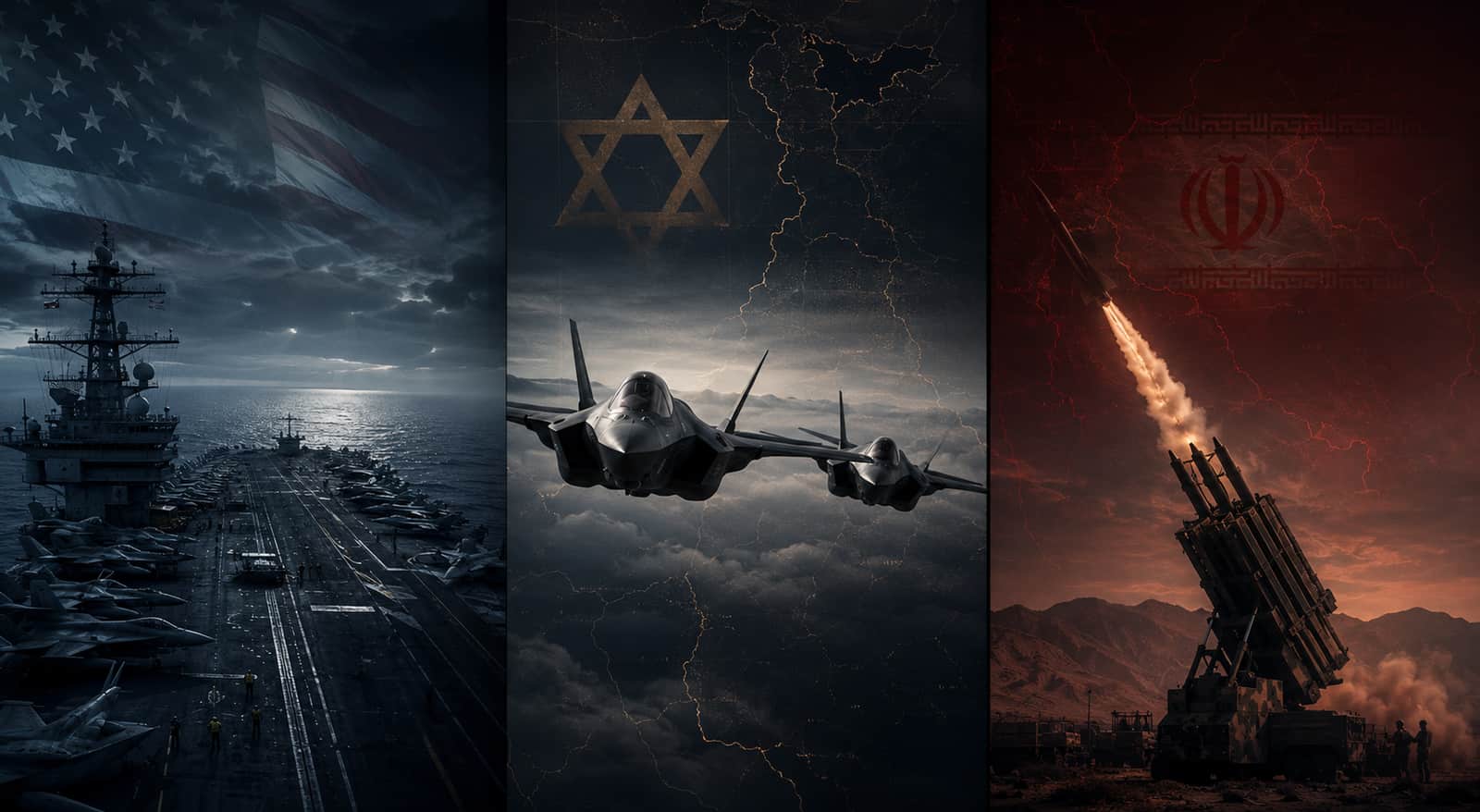
Three developments, occurring in rapid sequence between late 2025 and early 2026, shifted the trajectory decisively.
First, Iran's enrichment program reached levels that removed ambiguity about intent. Enrichment at the 60 percent level had been sustained for over two years. By late 2025, IAEA inspectors reported material that was approaching the 90 percent weapons-grade threshold, combined with a stockpile large enough to produce multiple devices. The gap between enrichment capability and weaponisation capacity had narrowed to a technical and political question rather than a physical one.
Second, Iranian-aligned armed groups in Iraq and Syria escalated their operational tempo against US installations. A series of precision strikes on logistics hubs and personnel quarters produced casualties that exceeded any comparable incident since the 2019-2020 cycle of escalation. The Biden-era policy of calibrated response had already been abandoned. The current US posture had moved toward pre-emption as a stated doctrine in the theatre.
Third, the Israeli government made a formal determination, communicated through official and unofficial channels, that it would not accept a nuclear-capable Iran as a permanent condition. This position had been stated many times before. What changed was that it was now accompanied by specific operational timelines and a level of preparation that signalled intent rather than negotiating posture.
The US Position
Washington's approach to the Iran confrontation in 2026 reflects a fundamental tension that has defined American policy in the region for thirty years: the desire to prevent Iranian regional dominance without absorbing the full costs of military intervention.
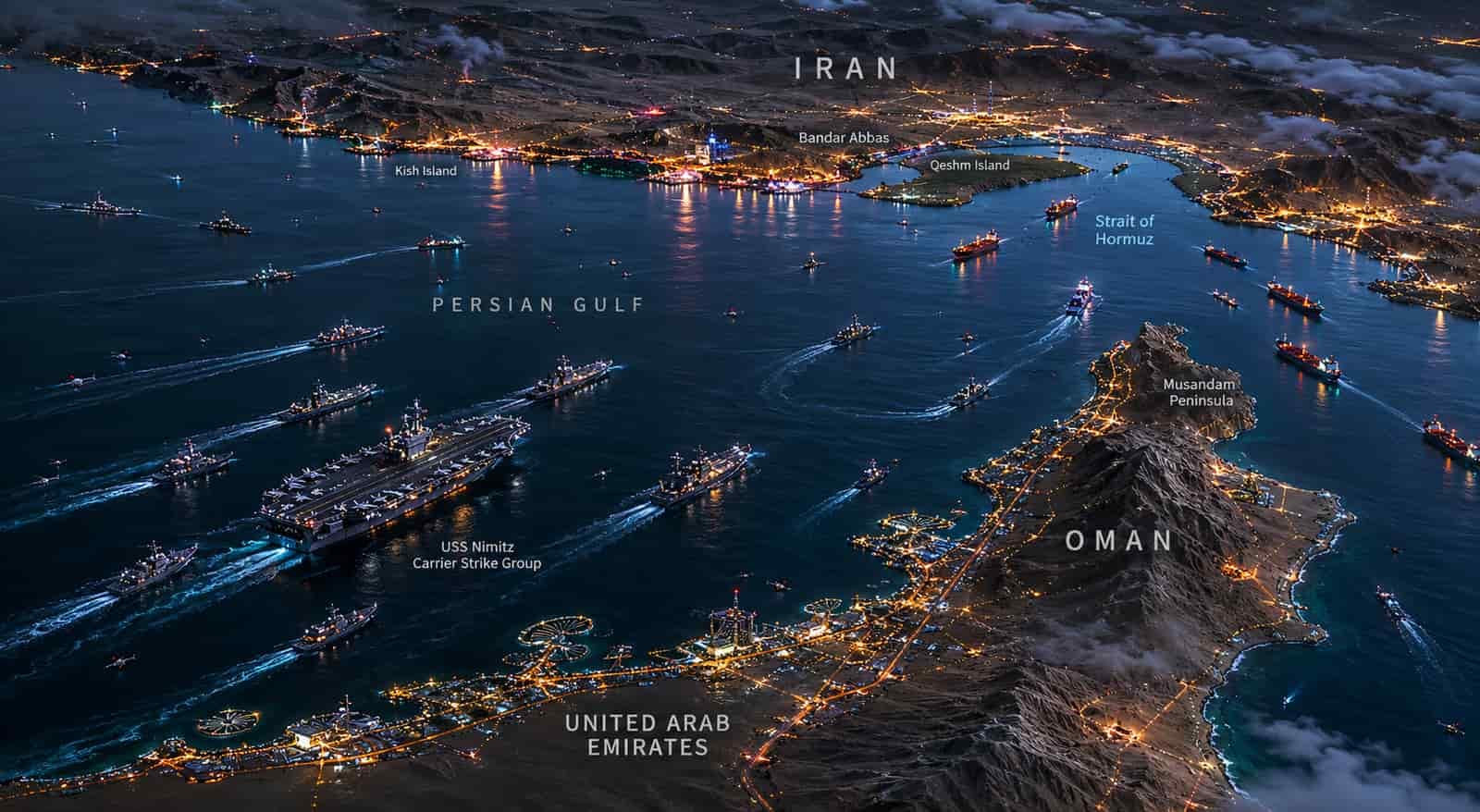
The United States has repositioned significant naval assets to the Persian Gulf and eastern Mediterranean. The carrier strike group presence in the region is at its highest sustained level in over a decade. This positioning serves multiple purposes simultaneously. It deters Iranian retaliation against regional partners. It provides an operational platform for any US participation in direct action against Iranian nuclear or military infrastructure. And it demonstrates to Israel that Washington is operationally engaged rather than diplomatically distant.
US officials have maintained public ambiguity about the precise threshold that would trigger direct American military action. This ambiguity is deliberate. It preserves decision-making flexibility, complicates Iranian escalation calculus, and avoids committing politically to outcomes that remain contingent on Iranian choices. Privately, the communications to Tehran have been considerably less ambiguous.
The Biden administration's 2015 nuclear deal framework collapsed formally in 2022. Since then, no comparable diplomatic architecture has been constructed. The current administration has indicated that it supports Israeli operational latitude while seeking to define the limits of that latitude through coordination rather than public constraint.
The Israeli Calculation
Israel's strategic position on Iran has hardened through a combination of threat assessment, domestic political consolidation, and the experience of October 2023 and its aftermath.
The October 2023 attacks and the subsequent eighteen months of multi-front conflict fundamentally altered Israel's risk tolerance. The experience of facing simultaneous pressure from Gaza, southern Lebanon, Yemen, and Iraqi-based groups demonstrated that Iran's proxy architecture was not a theoretical model. It was an operational reality that had produced significant civilian and military costs.
Israeli planning for direct action against Iran's nuclear program has been underway in various forms for over fifteen years. The core challenge has always been the geographic distance, the depth of Iran's hardened facilities, and the question of what the second and third-order effects of a strike would produce. None of these challenges has been eliminated. What has changed is the assessment that the cost of action has become more acceptable than the cost of continued inaction.
Israeli strategic doctrine distinguishes between preventive action, which it has conducted many times in its history, and deterrence through threat, which it views as increasingly unreliable against an adversary that has demonstrated willingness to absorb significant economic and diplomatic costs in pursuit of strategic objectives.
Iran's Response Architecture
Iran has spent the past decade constructing a regional posture designed specifically to raise the cost of direct military action above what it believes the United States and Israel are willing to pay.
This posture includes Hezbollah's accumulated precision-guided munitions capability in southern Lebanon, the Houthi missile and drone program in Yemen, Iraqi-based groups with demonstrated reach into Israel and US positions, and its own ballistic missile and drone inventory. The April 2024 direct strike against Israeli territory demonstrated that Iran was willing to conduct large-scale direct attacks, not merely proxy operations.
Iran's calculation appears to be that the combination of these assets creates an escalation cost that deters a full-scale military campaign. Whether this calculation is correct depends critically on whether the United States and Israel have reached a different conclusion about their own risk tolerance. The evidence from 2026 suggests they have.
The International Response
The international response to the escalating confrontation has been characterised by a level of diplomatic fragmentation that reflects the broader breakdown of multilateral consensus on Middle East security.
European governments have issued statements calling for diplomatic resolution while acknowledging privately that they have no leverage over any of the principal actors. Russia and China have condemned US and Israeli positioning as provocative while avoiding any direct engagement with the substantive question of Iranian nuclear ambitions. Gulf Arab states, whose security interests are acutely threatened by both a nuclear Iran and by a regional war, have adopted a posture of private support for containing Iran combined with public calls for restraint.
The UN Security Council has been effectively paralysed on Iran-related matters since 2022, when the last coordinated pressure framework collapsed under Russian and Chinese veto. There is no functioning multilateral mechanism capable of producing a diplomatic off-ramp at the current level of escalation.
What Comes Next
The trajectory of the confrontation depends on decisions that have not yet been made by actors who retain some flexibility, but less than at any point in the past decade.
The most significant near-term variable is whether Israeli operational action, if it occurs, draws direct US participation or proceeds with US awareness and tacit support but without formal American co-belligerency. This distinction matters enormously for the scope and duration of Iranian retaliation, for the legal and diplomatic framework in which the conflict unfolds, and for the long-term regional positioning of the United States.
The second variable is whether Iranian retaliation, if it comes, is calibrated to produce a defined political outcome or is driven by internal political and institutional pressures that prioritise demonstration over strategy. Iran's response to previous Israeli actions has shown both types of logic at different moments.
What is no longer a variable is the baseline: the era of managed tension, in which all sides competed through proxies and plausible deniability, has ended. The region is navigating a confrontation whose parameters are now being set by military planners rather than diplomatic ones.
Cite This Report
Institutional Citation Tool
Research & Analysis Q&A
What triggered the 2026 escalation between the US, Israel, and Iran?
Three converging developments: Iran's uranium enrichment approaching weapons-grade levels, escalating proxy attacks on US personnel in Iraq and Syria, and Israel's formal determination that the diplomatic window had closed.
What is the current US military posture in the region?
The US has repositioned significant naval assets including carrier strike groups to the Persian Gulf and eastern Mediterranean, at the highest sustained level in over a decade.
What are Iran's retaliatory capabilities?
Iran's response architecture includes Hezbollah's precision-guided munitions in Lebanon, Houthi capabilities in Yemen, Iraqi-based proxy groups, and its own ballistic missile and drone inventory demonstrated in the April 2024 direct strike against Israel.
Why has diplomacy failed to de-escalate?
The 2015 nuclear deal framework collapsed in 2022, no replacement has been constructed, and the UN Security Council has been paralysed by Russian and Chinese vetoes. No functioning multilateral mechanism exists for a diplomatic off-ramp.