Iran's Nuclear Program in 2026: What the Data Shows and What It Means
"The data on Iran's nuclear program no longer supports the argument that deterrence and diplomacy have time on their side."
The Numbers That Changed Everything
The debate over Iran's nuclear program has always been conducted with incomplete information. Intelligence agencies, international inspectors, and independent analysts work from different data sets with different methodologies. What has changed in 2026 is that the range of disagreement has narrowed dramatically. On the core question of where Iran stands, the assessments have converged.
The most consequential number is enrichment level. Iran has sustained uranium enrichment at 60 percent purity for over two years. This level has no civilian nuclear application. The only practical use for 60 percent enriched uranium is as a stepping stone to the 90 percent purity required for weapons-grade material. IAEA reports through 2025 documented the accumulation of this 60 percent stockpile at a rate that represents a deliberate program rather than a technical byproduct of civilian energy development.
The second critical number is stockpile volume. Based on IAEA quarterly assessments, Iran has accumulated enriched uranium at levels that, if further enriched to 90 percent, would be sufficient to produce multiple nuclear devices. Analysts working from the IAEA's most recent public data have produced estimates ranging from enough material for four to six weapons to as many as nine or ten, depending on the device design assumptions applied. The uncertainty in these estimates is real, but it does not change the strategic picture materially. The question is no longer whether Iran has enough material for one weapon. It is how many.
The Inspection Crisis
The reliability of data on Iran's nuclear program has been substantially degraded by a progressive restriction of IAEA access that began in 2021 and has continued through 2026.
In February 2021, Iran removed the additional protocol cameras and monitoring equipment that had been installed under the 2015 Joint Comprehensive Plan of Action. This removal eliminated real-time monitoring at declared facilities and created gaps in the data record that have never been fully reconstructed. The IAEA Board of Governors passed resolutions expressing concern. Iran continued the restrictions.
Since then, IAEA inspectors have been denied access to specific facilities, have encountered delays in sample collection, and have documented instances in which environmental samples showed traces of nuclear material at undeclared locations. The IAEA's February 2023 report described the safeguards situation in Iran as seriously undermined. Subsequent quarterly reports have maintained this language while documenting continued non-cooperation.
The inspection crisis matters for the current confrontation because it creates an information environment in which worst-case assumptions become operationally relevant. When verification is unavailable, planning must account for the possibility that the visible program is not the complete program. This logic has driven both US and Israeli assessments toward a more pessimistic baseline than the publicly available data alone would support.
The Breakout Timeline Compression
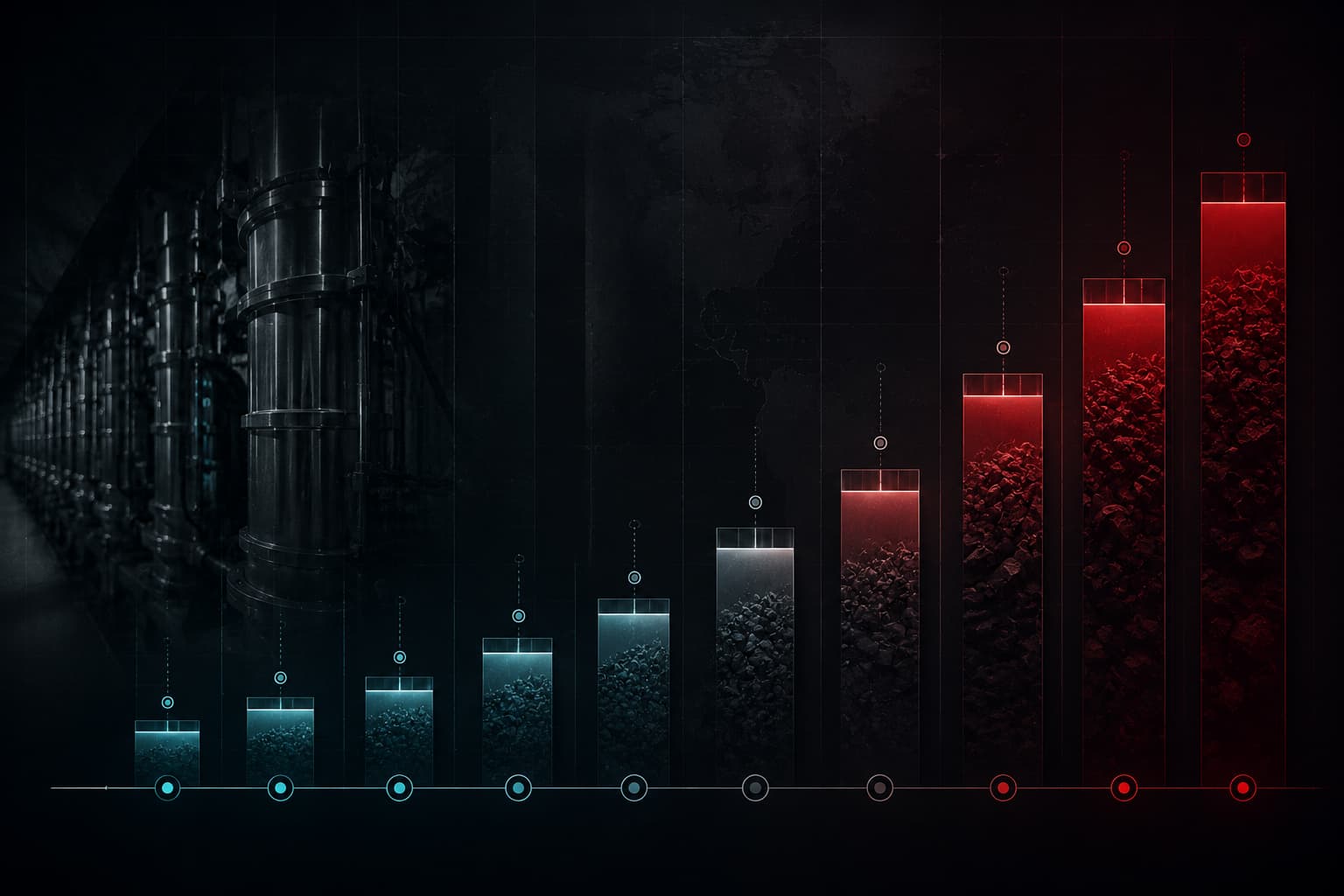
Perhaps the single most important analytical development of the past five years has been the compression of what analysts call the breakout timeline: the time Iran would need to produce enough weapons-grade material for a single device if it decided to accelerate enrichment to 90 percent.
In 2021, when the Joint Comprehensive Plan of Action was still theoretically in play, US government assessments placed the breakout timeline at approximately twelve months. This estimate assumed Iran would need to restart centrifuge cascades, install equipment that had been removed, and ramp up enrichment from the low levels permitted under the agreement. The timeline was long enough to provide warning and allow for a diplomatic or military response.
By 2023, following Iran's removal of monitoring equipment and continued centrifuge installation, official and independent estimates had compressed the breakout timeline to a matter of weeks. The installed centrifuge capacity, the accumulated enriched material, and the documented technical knowledge all pointed to a situation in which Iran could reach weapons-grade enrichment in a very short window once it made the political decision to do so.
By 2025, the practical distinction between a threshold capability and an operational one had become largely semantic. Iran possessed the material, the technical infrastructure, and the documented expertise to produce weapons-grade fissile material rapidly. Whether it had taken the additional steps of device design and weaponisation was the remaining uncertainty, and those steps were not verifiable through the degraded inspection regime that existed.
The Facility Map
Understanding the current confrontation also requires understanding the physical infrastructure of Iran's nuclear program, because it is this infrastructure that defines both the target set for any military action and the limits of what military action can achieve.
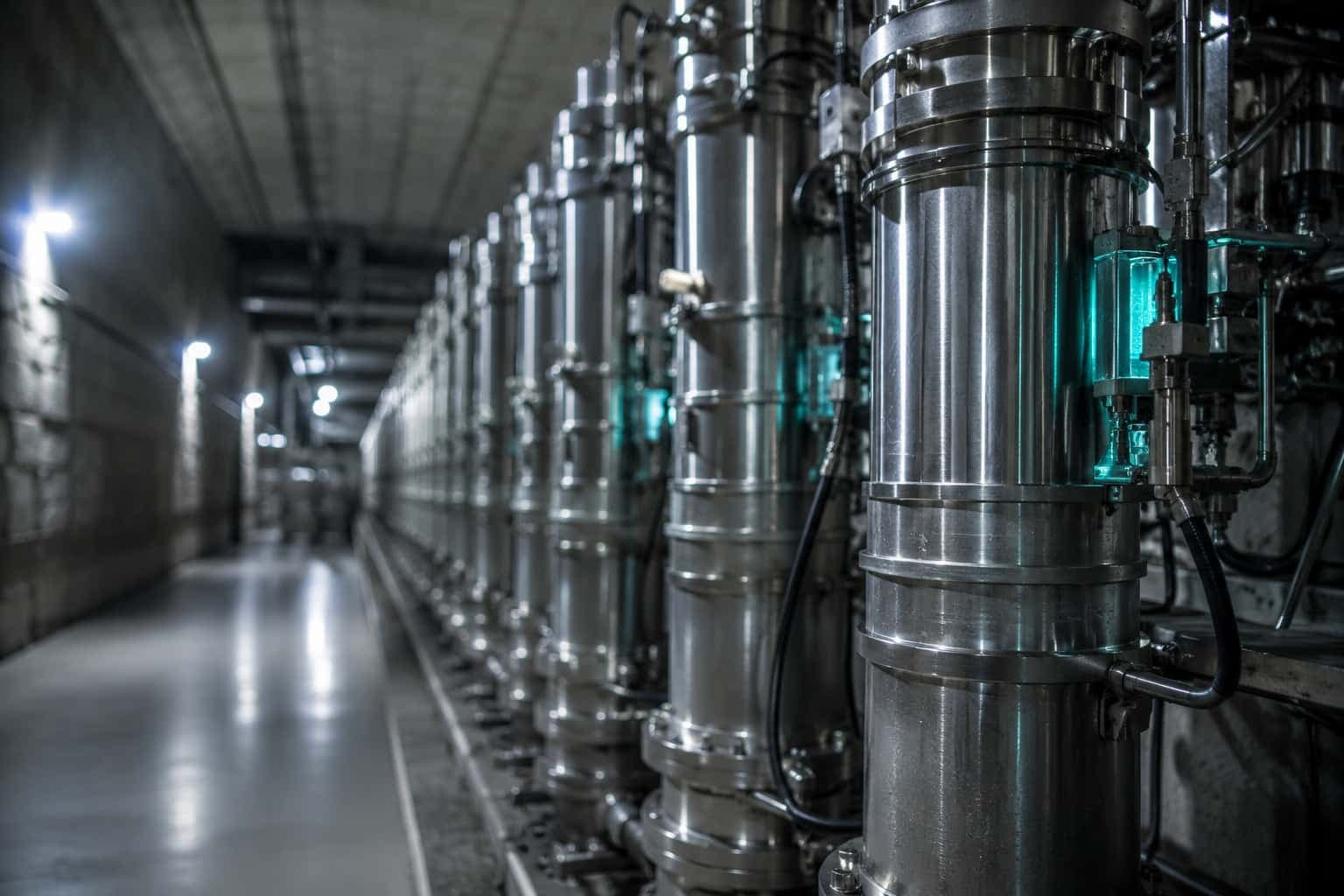
Natanz remains the primary enrichment facility. The underground halls at Natanz house the centrifuge cascades that have produced the bulk of Iran's enriched uranium stockpile. The facility has been hardened and expanded significantly since 2010. Some portions are buried at depths that create uncertainty about whether conventional munitions could destroy rather than damage them.
Fordow is a second enrichment facility built inside a mountain in the Qom province. It was disclosed to the IAEA by Western governments in 2009 after its existence had been concealed. Fordow's depth and hardening make it the most difficult target in the Iranian nuclear complex for conventional air power. Its centrifuge capacity is smaller than Natanz, but its survivability against air attack is substantially higher.
Arak is a heavy water reactor complex that, if operational in its original configuration, would have produced plutonium as a byproduct. Under the 2015 agreement, its core was disabled. The current status of Iranian efforts to restore its capabilities is disputed.
Isfahan is the uranium conversion facility where uranium is processed before enrichment. It handles the earlier stages of the fuel cycle and is a necessary precursor to enrichment operations. Isfahan is a softer target than Natanz or Fordow, but destroying it would not permanently halt enrichment given Iran's documented ability to reconstruct.
What the Data Does and Does Not Tell Us
The data on Iran's nuclear program tells us several things with reasonable confidence. Iran has enough enriched material for multiple weapons. The breakout timeline to weapons-grade material is measured in weeks rather than months. IAEA access is insufficient to verify the full scope of activities. The program has continued to expand despite sanctions and sabotage.
What the data does not tell us is whether Iran has made the political decision to weaponise. The distinction between a threshold state and a nuclear-armed state matters enormously for deterrence theory, for international law, and for the political legitimacy of military action. Iran's leadership has consistently denied that it seeks nuclear weapons while taking actions that are only explicable as weapons-oriented. This combination of denial and capability accumulation is itself a strategic posture designed to preserve maximum optionality while avoiding the specific threshold that might trigger decisive external response.
For US and Israeli planners, the data has produced a straightforward conclusion: the window in which military action could meaningfully set back Iran's program, rather than merely damage it and accelerate the reconstitution effort, is narrowing. Whether that window has already closed is the central factual dispute driving decisions that will define the region for a generation.
Cite This Report
Institutional Citation Tool
Research & Analysis Q&A
What level has Iran enriched uranium to?
Iran has sustained enrichment at 60 percent purity for over two years, with stockpiles sufficient for multiple weapons devices if further enriched to the 90 percent weapons-grade threshold.
How has IAEA access to Iranian nuclear sites changed?
Since 2021, Iran removed monitoring equipment, denied inspector access to specific facilities, and created data gaps that the IAEA has described as 'seriously undermining' safeguards verification.
What is the current breakout timeline estimate?
From over 12 months in 2021, the breakout timeline has compressed to weeks. Iran could reach weapons-grade enrichment rapidly once it makes the political decision to do so.
What are Iran's key nuclear facilities?
Natanz (primary enrichment, hardened underground), Fordow (mountain-buried, hardest to destroy), Arak (heavy water reactor), and Isfahan (uranium conversion facility).