US-China Trade Tensions Resurface in April 2026 Amid Iran Dispute and New Investigations
Summary
Washington's threat of 50% tariffs on China and accelerating trade investigations signal renewed tensions despite the November 2025 tariff truce extension.
Event Summary
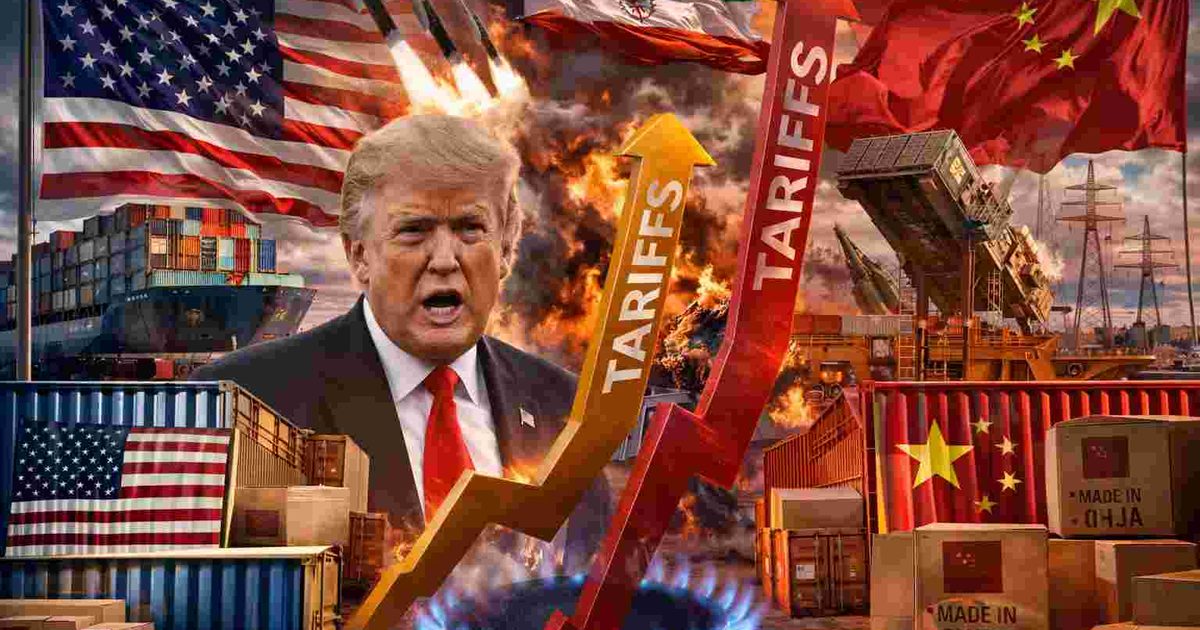
The US-China trade relationship entered a volatile new phase in April 2026 as President Trump threatened to impose a 50% tariff on China following reports that Beijing was preparing to deliver air defense systems to Iran. This development coincided with Section 301 investigations initiated by the US Trade Representative in March 2026 involving China and multiple trading partners, with public hearings scheduled for April 28. The moves cast doubt on the stability of trade relations between the world's two largest economies, despite the extension of reduced tariff rates negotiated in 2025. Average US tariffs on Chinese exports stood at 47.5% as of earlier periods, while China maintained tariffs of 31.9% on American goods. The geopolitical dimension represents a concerning expansion of tariff policy into security disputes beyond traditional trade grievances.
Key Facts
- Trump threatened 50% tariffs on China on April 12 following unverified reports about weapons shipments to Iran
- Section 301 investigation public hearings targeting excess capacity are scheduled for April 28, 2026
- The current 10% tariff rate between the US and China was extended through November 10, 2026
- The average US tariff on imports from China remained at nearly 50% through the end of 2025
- Bilateral trade between China and Iran totaled $9.96 billion in 2025
Immediate Context
The tariff threats emerged against a backdrop of relative trade stability following the May 2025 Geneva agreement. Both countries agreed in May 2025 to reduce reciprocal tariff rates from 125% to 10% for a 90-day period, which was subsequently extended until November 10, 2026 following meetings between Trump and Xi. However, the February 2026 Supreme Court ruling created new complications. The Supreme Court ruled on February 20, 2026 that the President cannot use the International Emergency Economic Powers Act to impose tariffs, forcing the administration to rely on alternative legal authorities including Section 301 and Section 232 investigations. In March 2026, the Trump administration announced new investigations into allegedly unfair trading practices by China, Vietnam, Taiwan, Mexico, Japan, the European Union, and dozens of other economies. The Iran-related tariff threat represents a further weaponization of trade policy for geopolitical objectives.
Why It Matters
The renewed trade tensions threaten global economic stability at a precarious moment. The IMF's reference forecast puts global growth at only 3.1% in 2026 and headline inflation at 4.4%, already reflecting pressures from Middle East conflict and energy price shocks. Trade policy uncertainty compounds these challenges. Real US imports from China dropped by 28% in 2025 alone, ending up 40% lower than on the eve of Trump's first trade war in 2018, demonstrating the severe impact on bilateral commerce. The economic costs extend beyond direct trade flows. The 2026 Trump tariffs amount to an average tax increase per US household of $700 and represent the largest US tax increase as a percent of GDP since 1993. Furthermore, without Trump's trade wars since 2017, US exports to China would have been nearly 60% higher in 2025, or roughly $90 billion annually. The linking of tariffs to geopolitical disputes over Iran establishes a dangerous precedent that erodes predictability in international commerce and investment. For global supply chains already strained by previous disruptions, the prospect of sudden 50% tariff increases creates paralyzing uncertainty for businesses planning capital allocation and inventory decisions.
Short Analysis
The April developments reveal three significant shifts in trade policy dynamics. First, the weaponization of tariffs for non-trade objectives represents an evolution from traditional economic disputes toward using commerce as a coercive tool in security matters. Chinese commentators argued that Washington is attempting to exert extreme pressure on Beijing to force it to push Iran toward concessions, turning to trade measures after failing to secure breakthroughs on the battlefield or at the negotiating table. Second, the Section 301 investigations signal a methodical approach to reimposing tariffs following the Supreme Court setback, potentially affecting multiple trading partners simultaneously. The average US tariff on imports from China remained elevated through 2025, distinct from the temporary April-May escalation when Trump raised tariffs by another 125 percentage points. Third, the fragility of negotiated agreements becomes apparent when geopolitical events can instantly trigger threats to unravel carefully constructed truces. The Iran situation demonstrates how quickly trade relationships can deteriorate despite formal extensions through November 2026.
Outlook
The trajectory of US-China trade relations hinges on multiple variables converging in coming months. President Trump is slated to meet with Chinese President Xi Jinping in a summit in Beijing on May 14 and 15, which could either defuse tensions or crystallize disagreements. The April 28 Section 301 hearings will provide clarity on the scope and timing of potential new tariffs based on excess capacity findings. If investigations find that action is required, Trump will be at liberty to apply further tariffs on Chinese goods, potentially triggering countermeasures from China and re-instigating the trade war. Market participants should prepare for continued volatility as trade policy remains subordinated to broader geopolitical considerations, with the Iran dispute demonstrating how quickly conditions can shift regardless of existing agreements.
Institutional Strategic Analysis Desk Q&A
What triggered the new US tariff threats against China in April 2026?
President Trump threatened 50% tariffs on China on April 12, 2026, following unverified reports that Beijing was preparing to deliver air defense systems to Iran, marking an expansion of tariff policy into geopolitical security disputes.
What is the current tariff rate between the US and China?
The current rate stands at 10% under an agreement extended through November 10, 2026, though average effective tariffs remain higher at approximately 47.5% on Chinese exports to the US when including all layers of duties.